

Are You Considered a Convicted Felon Before Sentencing? If you’ve been charged with a crime, you might wonder about your legal status before the sentencing process is complete. Knowing the felon definition and its legal implications is key. It helps you understand the law’s complexities.
The sentencing process can take a long time and be unclear. You might be seen as a convicted felon before the final decision, based on where you are and your case details. This status can greatly affect your rights and freedoms.
Dealing with this tough situation, knowing your rights and the possible outcomes of a conviction is vital. This article aims to clarify what it means to be considered a convicted felon before sentencing.
Contents
- 1 The Legal Definition of a Convicted Felon
- 2 The Criminal Justice Process Timeline
- 3 Are You Considered a Convicted Felon Before Sentencing?
- 4 Legal Implications During the Pre-Sentencing Period
- 5 Employment and Housing Status Before Sentencing
- 6 Civil Rights Affected Before and After Sentencing
- 7 State-by-State Variations in Felon Status
- 8 The Sentencing Process and Its Impact on Felon Status
- 9 Legal Options Before Sentencing
- 10 Conclusion: Are You Considered a Convicted Felon Before Sentencing?
- 11 FAQ
- 11.1 What does it mean to be considered a convicted felon before sentencing?
- 11.2 How does a felony conviction affect your civil rights?
- 11.3 Can you be considered a convicted felon if you are appealing your conviction?
- 11.4 How does being a convicted felon before sentencing affect your employment prospects?
- 11.5 Are there any differences in how federal and state laws treat felon status?
- 11.6 Can your housing status be affected by being considered a convicted felon before sentencing?
- 11.7 What are your legal options before sentencing?
- 11.8 How does sentencing finalize your status as a convicted felon?
The Legal Definition of a Convicted Felon
Knowing what it means to be a convicted felon is key. A convicted felon is someone who has been found guilty of a serious crime called a felony. This crime comes with big penalties. [Are You Considered a Convicted Felon Before Sentencing?]
Being called a convicted felon means you face big legal limits. You might not be able to vote, own a gun, or get certain jobs. The exact limits depend on where you live and the crime you were convicted of.
To show how felony convictions differ, look at this table:
| State | Felony Classification | Rights Restricted |
|---|---|---|
| California | Serious Felony | Voting Rights, Firearm Ownership |
| New York | Class A Felony | Voting Rights (temporarily), Certain Employments |
| Texas | First-Degree Felony | Voting Rights, Firearm Ownership, Certain Employments |
The label of convicted felon can affect your life a lot. It can change your job chances and how people see you. It’s important to know these effects to deal with the legal system well.
The Criminal Justice Process Timeline
Understanding the criminal justice system is key. It has several important steps, from arrest to sentencing. [Are You Considered a Convicted Felon Before Sentencing?]
The journey starts with an arrest. Law enforcement takes you into custody if they have probable cause. Then, you’re booked. This means your personal details, the charges, and possibly fingerprints and photos are recorded.
Next, you’ll have an initial appearance or arraignment. Here, the charges are formally presented, and you learn about your rights. Bail might be set, deciding if you stay in custody until your trial.
Then, there are pre-trial proceedings. These include hearings, motions, and possibly a plea bargain. If it goes to trial, the prosecution and defense present their cases to a judge or jury.
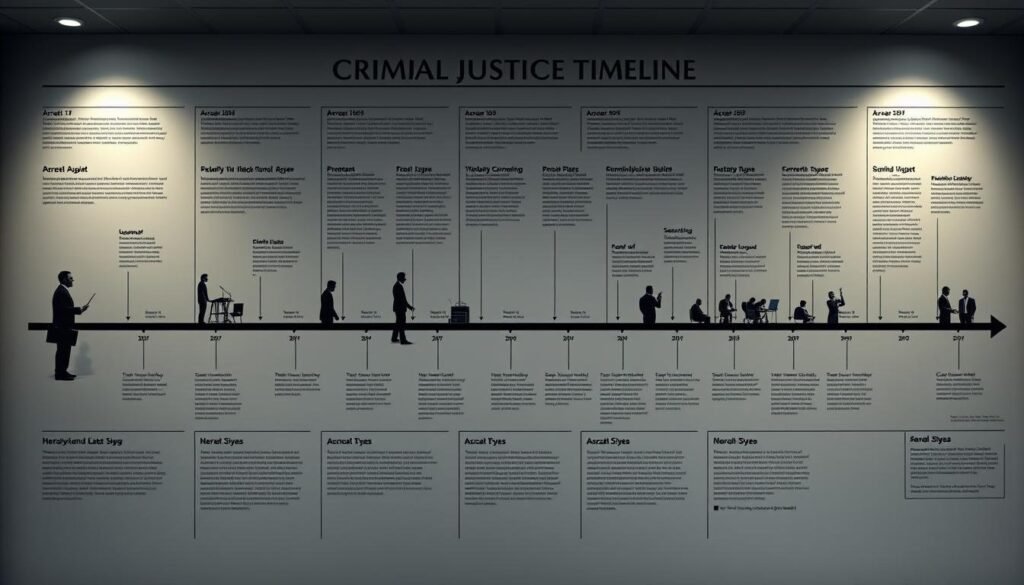
If found guilty, the case moves to sentencing. The judge decides your punishment based on the law and your case’s details. Knowing this timeline helps you understand the legal process.
Being called a “convicted felon” usually happens after a guilty verdict or plea. But, when it happens can vary by place and your case’s specifics. Knowing the timeline helps you prepare for what’s ahead.
Are You Considered a Convicted Felon Before Sentencing?
To know if you’re a convicted felon before sentencing, you need to look at federal and state laws. Being called a convicted felon affects your rights and freedoms.
Federal Law Perspective
At the federal level, “convicted felon” usually means someone who has been found guilty of a felony. But, the exact status before sentencing can change based on the situation. Federal law doesn’t always define “convicted felon” the same way before sentencing. It depends on the law or rule in question.
State laws differ a lot in defining and treating convicted felons before sentencing. Some states say you’re a convicted felon after a guilty verdict but before sentencing. Others might not. For example, some states might give back some rights after sentencing, but take them away before.
It’s key to understand these differences if you’re going through the criminal justice system. You should look at your state’s laws and talk to a lawyer to know how being considered a convicted felon before sentencing affects you.
Legal Implications During the Pre-Sentencing Period
The time before sentencing is packed with legal matters that shape your future. It’s key to know your rights and the rules you must follow. [Are You Considered a Convicted Felon Before Sentencing?]
You are still innocent until proven guilty. But, you might face travel limits or bail rules. You have the right to a lawyer and to know the charges against you.
Rights and Restrictions:
- Right to a fair trial
- Right to legal counsel
- Restrictions on travel or association
- Potential for bail or bond
The table below outlines important legal points and your rights before sentencing.
| Legal Implication | Description | Your Rights |
|---|---|---|
| Travel Restrictions | Limitations on travel to certain areas or countries | Right to request modifications |
| Bail Conditions | Specific conditions to be met while on bail | Right to a bail hearing |
| Association Restrictions | Limitations on associating with certain individuals | Right to contest restrictions |

It’s vital to grasp these legal points to get through the pre-sentencing phase well. Talk to your lawyer to safeguard your rights and understand any rules that might affect you. [Are You Considered a Convicted Felon Before Sentencing?]
Employment and Housing Status Before Sentencing
Facing felony charges can cause big problems with your job and where you live, even before you’re sentenced. The time before sentencing is very important. People face big challenges during this time.
Employment Challenges: Many bosses don’t want to keep or hire someone with felony charges. This can make you lose your job or find it hard to get a new one. A study found that people with felony charges are 50% less likely to get hired than those without.
- Employers do background checks that can show pending charges.
- Some companies have rules that say they must fire someone if they’re charged with a felony.
- There are fewer job chances because of the bad image of felony charges.

Housing Difficulties: Landlords also do background checks. If you have pending felony charges, it can be hard to find a place to live. Some landlords won’t rent to people with charges, making things even tougher.
- It’s hard to find landlords who will rent to you if you have pending charges.
- If your landlord finds out about the charges, you might get kicked out.
- Being watched more by the police can also make it harder to keep a place to live.
The problems with jobs and homes before sentencing show we need help for people going through this. It’s important to understand these issues to find ways to make things better.
Civil Rights Affected Before and After Sentencing
Being convicted of a felony can change your life in big ways, even before you’re sentenced. It’s important to know how these changes affect you.
Being a convicted felon can limit your rights. This includes voting rights, the right to own guns, and running for public office. The exact rights you lose can depend on where you live.
Here’s a breakdown of how civil rights can be impacted:
| Civil Right | Pre-Sentencing Status | Post-Sentencing Status |
|---|---|---|
| Voting Rights | May be restricted | Often revoked |
| Right to Bear Arms | May be restricted | Typically revoked |
| Public Office Eligibility | May be affected | Often disqualified |
Getting these rights back, if you can, usually needs a special legal process after you’re sentenced. Always talk to your lawyer to understand your situation.
Also, losing these rights can affect more than just your legal status. It can impact your job chances and what social services you can get. [Are You Considered a Convicted Felon Before Sentencing?]
State-by-State Variations in Felon Status
The legal status of a convicted felon varies across the United States. Each state has its own rules. This can cause confusion and different outcomes for felons.
State interpretations of felon status can vary a lot. This is true for voting rights, job opportunities, and where you can live. For example, some states let you vote again after a set time. Others have a harder process.
Looking at state laws shows how different they are. Here’s a table that shows some of these differences:
| State | Voting Rights Restoration | Employment Restrictions |
|---|---|---|
| California | Automatic restoration after completing parole | Restrictions on certain government jobs |
| Florida | Requires application to the Office of Executive Clemency | Restrictions on jobs involving children and vulnerable adults |
| Texas | Automatic restoration after completing sentence, including any fines | Restrictions on certain government and private sector jobs |
These variations in felon status show why it’s key to know your state’s laws. People with felony convictions need to understand their rights and the limits they face.
The Sentencing Process and Its Impact on Felon Status
After being found guilty, the sentencing process starts. It greatly affects your legal status. The severity of your punishment is decided during this time.
Being sentenced as a felon changes your life a lot. Sentencing makes you a convicted felon. This affects your job, where you can live, and your rights. Knowing how sentencing works is key to understanding the legal system.
| Aspect of Life | Pre-Sentencing | Post-Sentencing |
|---|---|---|
| Employment Opportunities | Limited due to pending charges | Restricted due to felony conviction |
| Housing | Potential restrictions | Possible denial of public housing |
| Civil Rights | Some rights may be restricted | Felony conviction may lead to loss of voting rights |
The sentencing process affects your punishment and future. It impacts your social and economic life. It’s important to know this to plan your legal future well.
In conclusion, sentencing is a key part of the criminal justice system. It makes you a convicted felon and changes many parts of your life. [Are You Considered a Convicted Felon Before Sentencing?]
Legal Options Before Sentencing
Knowing your legal options before sentencing can greatly affect your case’s outcome. During this time, you have several legal recourses to explore. These can potentially influence the court’s decision.
Some key legal options include:
- Requesting a pre-sentence investigation report to provide the court with a detailed background check.
- Submitting a sentencing memorandum to the court outlining mitigating factors.
- Pursuing a plea bargain that may reduce the severity of the sentence.
It’s vital to work closely with your legal counsel. They can help determine the best strategy for your case. By understanding and using these legal options, you can better navigate the sentencing process.
Conclusion: Are You Considered a Convicted Felon Before Sentencing?
You now know more about your legal status before sentencing. It’s important to understand the difference between being charged, convicted, and sentenced. This affects your rights, job chances, and where you can live. [Are You Considered a Convicted Felon Before Sentencing?]
The term “convicted felon” means different things in different places. Being seen as a felon before sentencing can have big effects. How states handle sentencing also changes your felon status.
In conclusion, knowing your legal status before sentencing is complex. Getting professional help is key to understanding your situation. This summary covers the main points. It shows why knowing your rights and the possible outcomes of a conviction are crucial.
See Also: Can Felons Travel to Canada? Tips, Rules, and Legal Pathways!
FAQ
What does it mean to be considered a convicted felon before sentencing?
Being considered a convicted felon before sentencing means you’ve been found guilty of a felony. But you haven’t been sentenced yet. This status can affect your rights and freedoms.
How does a felony conviction affect your civil rights?
A felony conviction can limit your civil rights. This includes your right to vote, own firearms, and serve on a jury. The exact rights affected depend on the state and the crime.
Can you be considered a convicted felon if you are appealing your conviction?
Yes, you can still be seen as a convicted felon even if you’re appealing. This is unless your appeal is successful and your conviction is overturned.
How does being a convicted felon before sentencing affect your employment prospects?
Being considered a convicted felon before sentencing can make finding a job hard. Many employers do background checks and might not hire someone with a felony.
Are there any differences in how federal and state laws treat felon status?
Yes, federal and state laws treat felon status differently. Federal law and various state laws have different definitions and consequences for being a convicted felon.
Can your housing status be affected by being considered a convicted felon before sentencing?
Yes, being considered a convicted felon before sentencing can affect your housing. Some landlords might not rent to someone with a felony. [Are You Considered a Convicted Felon Before Sentencing?]
What are your legal options before sentencing?
Before sentencing, you can try to negotiate a plea deal or present evidence to the court. You can also challenge the charges. It’s best to talk to a lawyer to know your options.
How does sentencing finalize your status as a convicted felon?
Sentencing makes your punishment official, making you a convicted felon. After sentencing, your status is usually final. This is unless you appeal and win, having your sentence or conviction overturned.

Van Maldonado, born in California, holds a degree in Criminology and Police Science. Currently serving as an investigative officer at a local police station, he spends his leisure time writing insightful content for FelonScope.com.