

Can a Felon Be a Foster Parent? You might wonder if a felony stops you from being a foster parent. The truth is, foster care laws differ from state to state.
Having a felony makes it tough to become a foster parent. Yet, it’s not out of the question. You can still offer a loving home to a child in need, despite the hurdles.
It’s important to know the foster care laws in your area and how to get past the challenges. Learning about the rules and the help available is key. This way, you can start creating a caring space for a child.
Contents
- 1 The Reality of Foster Parenting with a Criminal Record
- 2 Can a Felon Be a Foster Parent? Overcoming Barriers
- 3 Understanding Automatic Disqualifiers
- 4 State-by-State Variations in Foster Care Laws
- 5 The Importance of Time Since Conviction
- 6 The Foster Parent Application Process for Those with Records
- 7 Strategies for Addressing Your Criminal History
- 8 Legal Remedies to Improve Eligibility
- 9 Finding Supportive Agencies and Advocates
- 10 Success Stories: Felons Who Became Foster Parents
- 11 Conclusion: Can a Felon Be a Foster Parent?
- 12 FAQ
- 12.1 Can I become a foster parent if I have a felony conviction?
- 12.2 What types of crimes are considered automatic disqualifiers for foster parenting?
- 12.3 How does the time since my conviction affect my eligibility to become a foster parent?
- 12.4 Do I have to disclose my criminal history when applying to become a foster parent?
- 12.5 Can I appeal a decision to deny my foster parent application based on my criminal record?
- 12.6 Are there any legal remedies that can help improve my eligibility to become a foster parent?
- 12.7 How do state laws affect my eligibility to become a foster parent with a criminal record?
- 12.8 Can I still become a foster parent if my conviction is related to a substance abuse issue?
The Reality of Foster Parenting with a Criminal Record
If you’re thinking about becoming a foster parent with a criminal record, it’s key to know the foster care system well. The process checks if you’re right for the job. A criminal record can make this check harder.
Dealing with the foster care system is tough, especially with a criminal history. The system focuses on keeping kids safe. So, you’ll face strict background checks and assessments. [Can a Felon Be a Foster Parent?]
To get through this, you need to know what’s needed and how your record affects your foster parent application process. This includes the application, home study, checks, and interviews.
You’ll have to share your criminal history and show you’ve changed. Knowing your state’s laws about foster care and criminal records is also important.
Being ready and informed helps you face the challenges of your record. This way, you can move forward with your foster parent application.
Can a Felon Be a Foster Parent? Overcoming Barriers
Becoming a foster parent with a felony conviction means understanding the rules and facing challenges. Many worry if their criminal record will stop them from fostering.
But, having a felony doesn’t mean you can’t foster. The choice depends on your felony’s type, how long ago it happened, and if you’re a good foster parent.

To increase your chances, be open about your criminal past. Honesty is key in gaining trust from social workers and agencies.
Several things can affect your eligibility:
- The type and severity of the felony
- The time that has passed since the conviction
- Your behavior and actions since the conviction
- Your ability to provide a stable and nurturing environment
Knowing these points helps you get ready for the application. Show your strengths and your dedication to a safe, loving home. This way, you can beat the hurdles of your criminal record.
Getting advice from experts in foster care is also smart. They know how to help applicants with criminal histories. They offer insights and guide you through the foster care system.
By taking the right steps and being ready, you can become a foster parent even with a felony. [Can a Felon Be a Foster Parent?]
Understanding Automatic Disqualifiers
Knowing which crimes can stop you from being a foster parent is key. Some crimes can automatically keep you out of the foster care system. These are called automatic disqualifiers.
These disqualifiers include serious crimes that could harm children. Some examples are:
- Violent crimes, such as assault or battery
- Sexual offenses, including child molestation or exploitation
- Crimes involving child abuse or neglect
- Felony convictions related to domestic violence
- Crimes that indicate a risk to child safety, such as kidnapping
It’s essential to note that the specific crimes considered automatic disqualifiers can vary by state. Most states have rules that keep certain people from being foster parents. For example, a violent crime or sexual offense conviction is usually a big problem.
When you apply to be a foster parent, your past crimes will be checked closely. They look at the crime, when you were convicted, and if you’ve had other crimes. This helps figure out if you’re safe for the kids.
The table below shows common crimes that can stop you from being a foster parent:
| Crime Type | Likelihood of Disqualification | State Variations |
|---|---|---|
| Violent Crimes | High | Yes |
| Sexual Offenses | Very High | Yes |
| Child Abuse/Neglect | Very High | Minimal |
| Domestic Violence | High | Yes |
In conclusion, knowing about automatic disqualifiers is very important. While some crimes can really hurt your chances, it’s also good to check your state’s laws.
State-by-State Variations in Foster Care Laws
It’s key to know the details of foster care laws in each state if you want to be a foster parent with a criminal record. The rules for foster care vary a lot across the U.S. Each state has its own laws and rules.
State-specific requirements are very important for who can be a foster parent. For example, some states check backgrounds more strictly. Others might be more flexible for people with felonies. [Can a Felon Be a Foster Parent?]
Understanding State-Specific Requirements
To deal with the complex foster care laws, you need to know your state’s rules. Start by looking into:
- The crimes that stop you from being a foster parent
- How to appeal if your application is denied because of a crime
- Any extra training or certification needed for foster parents with felonies
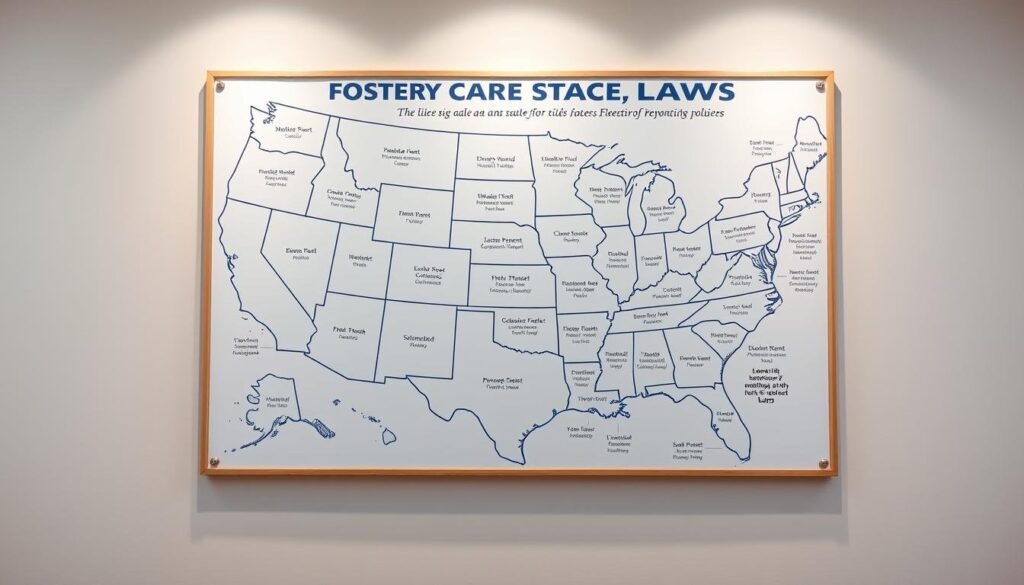
For instance, some states make it easier for people with older crimes. Others are stricter. Knowing these differences helps you through the application.
By understanding the different laws and what your state requires, you can work towards being a foster parent. It’s also smart to talk to local foster care agencies or groups for help.
The Importance of Time Since Conviction
The time since your conviction is key when you want to be a foster parent. It’s important to understand how your past affects your present. This helps you know if you can foster a child.
Usually, the longer it’s been since your conviction, the better you look to foster care agencies. This is because it shows you’ve had time to change and live a law-abiding life. [Can a Felon Be a Foster Parent?]

The type of conviction and its circumstances matter a lot. For example, a felony is seen as worse than a misdemeanor. But, showing you’ve been responsible over time can help.
When you apply to be a foster parent, talk about your past openly. Explain your conviction and how you’ve changed. Showing you’ve worked hard to avoid mistakes again is good.
The Foster Parent Application Process for Those with Records
If you’re thinking about becoming a foster parent and have a criminal history, knowing the application process is key. Becoming a foster parent involves several steps. Having a criminal record can make this process harder.
The first step is to reach out to a local foster care agency or social service department. They will help you with the initial application. They will also tell you what documents and assessments you need.
Disclosing Your Criminal History
Telling about your criminal history is a big part of the application. It’s important to be truthful about your past. If you don’t share this information, your application might get rejected. [Can a Felon Be a Foster Parent?]
When you share your criminal history, be ready to give all the details. This includes what you were convicted of, when it happened, and any actions you took afterward, like probation or rehab.
After you share your criminal history, the agency will do a deep assessment. This might include background checks, home visits, and interviews with everyone in your household. They will check if you’re a good fit to be a foster parent. They’ll look at your criminal record, how long ago it happened, and if you can provide a safe and loving home for a child.
Knowing the foster parent application process and being ready to talk about your criminal history can help a lot. It’s also a good idea to get help from agencies or people who know how to support those with criminal records in foster care.
Strategies for Addressing Your Criminal History
Applying to be a foster parent with a criminal history requires a proactive approach. You can take steps to lessen the impact of your record and boost your chances.
First, honesty about your past is crucial. Transparency is key in the application process. Be ready to share the details of your conviction and any efforts towards rehabilitation.
- Obtain a certificate of rehabilitation or expungement if possible.
- Gather character references from people who know you and can vouch for your suitability as a foster parent.
- Highlight any positive changes you’ve made in your life since your conviction, such as completing a rehabilitation program or maintaining steady employment.
- Be prepared to discuss your criminal history in detail during the application process.
By taking these steps, you can effectively address your criminal history and mitigate its impact on your application. It’s also beneficial to work with an agency that has experience with applicants who have criminal records.
To further support your application, consider the following:
- Document any community service or volunteer work you’ve done.
- Show evidence of stable housing and a supportive family environment.
- Highlight your understanding of the challenges faced by foster children and your ability to provide a nurturing environment.
By addressing your criminal history proactively and presenting a strong application, you can increase your chances of becoming a foster parent despite your past. [Can a Felon Be a Foster Parent?]
Legal Remedies to Improve Eligibility
If you have a criminal record, looking into legal options is key to getting into foster care. Knowing what legal paths you can take can really help you become a foster parent.
Expungement is a big legal remedy. It lets you clear your criminal record under certain rules. This can help a lot because it might remove things that make you not eligible.
- Look up the expungement laws in your state, as they differ a lot.
- Talk to a lawyer who knows about clearing criminal records.
- Get all the papers you need about your crime and any steps you’ve taken to get better.
Showing you’ve changed since your crime is another way to improve your chances. This can include:
| Rehabilitation Effort | Description | Benefit |
|---|---|---|
| Counseling/Therapy | Going to programs that help with issues from your crime. | Shows you’re serious about getting better and staying stable. |
| Community Service | Doing work for the community or volunteering. | Shows you’re giving back and making a positive impact. |
| Education/Training | Going to school or getting training for a job. | Makes you more employable and helps you grow personally. |
Also, knowing the laws and rules about foster care in your state is important. Some states are more open to foster care than others. So, it’s vital to check what your state requires.
By looking into these legal options and taking action, you can make yourself a better candidate to be a foster parent. It’s all about showing you can give a safe and caring home to kids.
Finding Supportive Agencies and Advocates
You can overcome barriers to foster parenting by finding agencies that support people with criminal histories. It’s important to look for a foster care agency that gets your situation. They should be ready to work with you.
Supportive agencies foster care programs help people with criminal records navigate the foster care system. These agencies know how to handle cases involving felons. They can guide you through the application process.
To find these agencies, start by researching local foster care organizations. Reach out to them to ask about their experience with clients who have criminal records. Also, look for foster care advocates who can support you and make the process easier.
Working with supportive agencies and advocates can help you become a foster parent, even with a criminal history. [Can a Felon Be a Foster Parent?]
Success Stories: Felons Who Became Foster Parents
Many felons have turned their lives around to become foster parents. They provide loving homes to children in need. These inspiring stories show that even those with past convictions can create a nurturing environment for foster children.
A woman, after serving time for a non-violent crime, decided to help others. She became a certified foster parent. Now, she cares for many children. Her story proves that people can change and positively impact their communities.
| Success Factor | Impact |
|---|---|
| Rehabilitation Efforts | Demonstrates commitment to change |
| Supportive Community | Provides necessary guidance and resources |
| Personal Determination | Overcomes obstacles to achieve goal |
These stories motivate others facing similar challenges. By sharing these experiences, we can inspire more to become foster parents, no matter their past.
See Also: Can a Felon Be a Phlebotomist? Career Options!
Conclusion: Can a Felon Be a Foster Parent?
Becoming a foster parent with a felony conviction is tough, but it’s doable. You can get past the hurdles by learning about your state’s foster care laws.
State laws are key in deciding if you can be a foster parent. They look at how long ago your crime was, what it was, and if you’re a good fit. These things matter a lot when you apply.
By dealing with your past crime well, getting legal help when needed, and finding support, you can boost your chances. Many people with felonies have become foster parents. They’ve given loving homes to kids who really need them.
As you finish your foster care journey, remember you can beat the odds with the right help. You can change a child’s life by becoming a foster parent. [Can a Felon Be a Foster Parent?]
FAQ
Can I become a foster parent if I have a felony conviction?
Whether you can become a foster parent with a felony conviction depends on your state’s rules. Each state has its own rules. Some states might not allow certain crimes, while others look at how long ago you were convicted and how you’ve acted since then.
What types of crimes are considered automatic disqualifiers for foster parenting?
Crimes that harm children, like child abuse or neglect, are usually automatic no-goes. Violent felonies or sex crimes might also keep you from being a foster parent.
How does the time since my conviction affect my eligibility to become a foster parent?
The longer it’s been since your conviction, the better your chances. This shows you’ve been behaving well for a longer time.
Do I have to disclose my criminal history when applying to become a foster parent?
Yes, you must be honest about your criminal history when applying. Not telling the truth can mean your application gets rejected.
Can I appeal a decision to deny my foster parent application based on my criminal record?
Yes, you can appeal if your application is denied. Each state and agency has its own process. You’ll usually need to provide more details about your past.
Are there any legal remedies that can help improve my eligibility to become a foster parent?
Yes, legal options like expungement or record sealing might help. These can lessen the impact of your criminal record on your application. [Can a Felon Be a Foster Parent?]
How do state laws affect my eligibility to become a foster parent with a criminal record?
State laws about foster care and criminal records are different everywhere. Knowing your state’s laws is key to figuring out if you can be a foster parent. [Can a Felon Be a Foster Parent?]
A conviction for substance abuse doesn’t automatically stop you from being a foster parent. But, you’ll need to show you’ve worked on your issues and are committed to staying sober.

Van Maldonado, born in California, holds a degree in Criminology and Police Science. Currently serving as an investigative officer at a local police station, he spends his leisure time writing insightful content for FelonScope.com.