

Can a Felon Be a Police Officer? Are you thinking about a career in law enforcement with a felony conviction? You’re not alone. Many with felony records face big challenges in becoming police officers.
The big question is: can people with felony convictions become police officers? While the rules are strict, some felons can still join the force.
It’s important to understand the rules for felons wanting to be police officers. You’ll need to get past legal hurdles and meet certain requirements. These rules can change depending on where you live.
Contents
- 1 The Current Legal Landscape for Felons in Law Enforcement
- 2 Understanding Why Felons Face Barriers to Becoming Police Officers
- 3 Can a Felon Be a Police Officer? The Short Answer
- 4 The Background Check and Psychological Evaluation Process
- 5 Expungement: Clearing Your Record for Law Enforcement Eligibility
- 6 Pardons and Restoration of Civil Rights
- 7 Waiver and Appeal Processes in Select Jurisdictions
- 8 Alternative Careers in Law Enforcement for Felons
- 9 Steps to Take If You’re a Felon Pursuing a Police Career
- 10 Legal Resources and Support Organizations
- 11 Conclusion: Can a Felon Be a Police Officer?
- 12 FAQ
- 12.1 Can a felon become a police officer in the United States?
- 12.2 What is the typical background check process for police officer applicants?
- 12.3 How does expungement affect a felon’s eligibility to become a police officer?
- 12.4 What is the difference between a pardon and expungement?
- 12.5 Are there alternative careers in law enforcement for felons?
- 12.6 Can a felon appeal a denial of their police officer application?
- 12.7 What resources are available to felons pursuing a police career?
- 12.8 How can a felon prepare for the police officer application process?
The Current Legal Landscape for Felons in Law Enforcement
People with felony records find it hard to get into law enforcement. This is because of strict rules and a detailed law enforcement background check. This check is a must for anyone wanting to be a police officer.
Police agencies do deep background checks. They look at a person’s criminal past and more. For those with felonies, this is a big challenge. It affects their chance to become a police officer.
The rules for felons in law enforcement vary by place. But, most places won’t hire someone with a felony. They think a felony record means someone can’t be trusted to enforce the law.
But, some felons can still become police officers. Knowing the laws in your area is key. Some places let felons try again or appeal their decision.
Those with felony records wanting to be police officers need to know the rules. The legal world can be tough, but there are resources to help. These can guide you through the process.
Understanding Why Felons Face Barriers to Becoming Police Officers
People with felony convictions find it hard to become police officers. This is because of old laws and policies that guide hiring in law enforcement.
Law enforcement values integrity and trust. So, those with felony convictions are seen as not fitting for these roles. [Can a Felon Be a Police Officer?]
The Role of Public Perception
The public’s view greatly affects law enforcement hiring. People want police to be role models and uphold high standards. Because of this, law enforcement hiring practices often exclude those with felony convictions. This keeps the public’s trust.
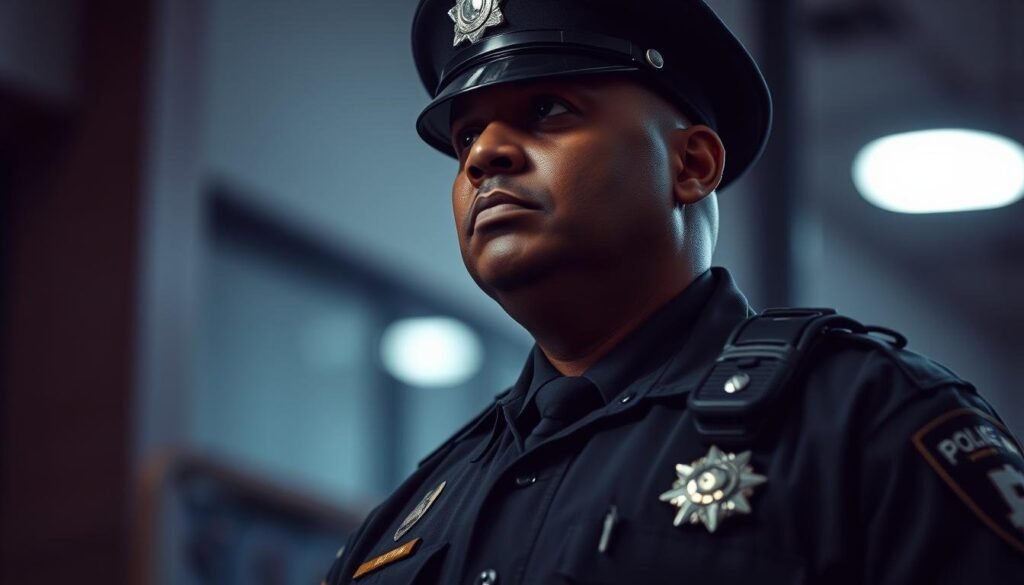
The public’s opinion has a big impact on law enforcement hiring practices. Agencies say they exclude felons to keep public trust. This makes sense, given a police officer’s job. [Can a Felon Be a Police Officer?]
It’s important for those with felony convictions to understand these barriers. Knowing why they exist helps you find ways to work in law enforcement, even if it’s not as a police officer.
Can a Felon Be a Police Officer? The Short Answer
In rare cases, people with felony convictions can become police officers. Despite usual barriers, exceptions do exist. This is because of background checks and the need for high moral character.
Exceptions depend on the felony type, how long ago it happened, and if records were expunged or pardoned. For example, some places might accept applicants with felonies if they’ve shown they’ve changed. This is especially true for non-violent crimes.
| State | Policy on Felons Becoming Police Officers | Notable Exceptions |
|---|---|---|
| California | Generally disqualifies felons | Some non-violent felonies may be considered after 5 years |
| Texas | Discretionary based on the nature of the felony | Individuals with pardons or expunged records may be eligible |
| New York | Strict disqualification for most felonies | Rare exceptions for those with significant rehabilitation |
It’s important for those with felony convictions to know the laws in their area about joining the police. While it’s tough, it’s not impossible for those who are willing to work through the legal system. [Can a Felon Be a Police Officer?]
The Background Check and Psychological Evaluation Process
For those with a felony record, the background check and psychological evaluation are big challenges in becoming a police officer. It’s important to know about these steps to face the hurdles ahead.
The law enforcement background check looks at your past, including any crimes, jobs, and personal references. It checks if you’re right for a career in law enforcement.
A big part of becoming a police officer is the psychological evaluation. It checks if you’re mentally ready for the job. You’ll take tests and have interviews to show you’re stable and can make good decisions.
Psychological Evaluation Criteria
The evaluation looks at different parts of your personality and behavior. It checks:
- Emotional stability and resilience
- Ability to handle stress and pressure
- Decision-making and problem-solving skills
- Interpersonal communication and teamwork abilities
The screening for felons is very strict. It looks closely at your past actions and how they affect your future as a police officer. Knowing what these evaluations look for can help you get ready and possibly overcome your felony record.
Understanding the background check and psychological evaluation can help you prepare. This way, you can address any concerns before they become big problems. [Can a Felon Be a Police Officer?]
Expungement: Clearing Your Record for Law Enforcement Eligibility
Getting your criminal record cleared through expungement can really help you become a police officer. If you’re a felon wanting to join law enforcement, knowing about expungement is key.
Expungement is a legal way to wipe your criminal record clean. For felons, it’s a big step towards being eligible for a law enforcement job. You file a petition with the court, and they decide if your record should be cleared.

Expungement has many benefits for felons aiming for a law enforcement career. It not only removes your criminal record but also makes you more eligible for police jobs.
- Improved chances of being hired by law enforcement agencies
- Enhanced credibility during the application process
- Better opportunities for career advancement
The table below shows the main differences between having a criminal record expunged and not:
| Category | With Expungement | Without Expungement |
|---|---|---|
| Eligibility for Law Enforcement | Significantly improved | Limited or denied |
| Career Opportunities | Better chances for advancement | Restricted opportunities |
| Credibility | Enhanced credibility | Potential distrust from employers |
By expunging your record, you’re taking a big step towards a law enforcement career. It’s important to talk to a legal expert to learn about the expungement process and its benefits in your area.
Understanding the expungement process and its benefits can empower you to pursue your dream of becoming a police officer.
Pardons and Restoration of Civil Rights
If you’re a felon wanting to be a police officer, knowing about pardons and civil rights is key. These steps can help clear your record and open doors to a law enforcement career. It’s a complex process, but understanding your options is the first step.
Pardons and civil rights restoration are different. A pardon forgives a crime. Civil rights restoration gives back rights lost due to a felony, like voting or holding office.

The steps to restore civil rights vary by state. You usually need to file a petition with a court or government agency. Your petition should include:
- Details about your conviction and sentence
- Why you want your civil rights back
- Proof of rehabilitation, like community service or work history
Restoring civil rights helps, but it doesn’t automatically make you a police officer. Agencies also check your background and mental health.
To boost your chances of becoming a police officer after a felony, follow these steps:
- Learn about your state’s laws on pardons and civil rights restoration.
- Get advice from a lawyer to help you.
- Make a strong case by showing your rehabilitation and desire to serve as a police officer.
By understanding and working through pardons and civil rights restoration, you can overcome legal hurdles. This can lead you to a career in law enforcement. [Can a Felon Be a Police Officer?]
Waiver and Appeal Processes in Select Jurisdictions
If you’re a felon wanting to join law enforcement, knowing the waiver process is key. In some places, people with a criminal past can get a waiver. This lets them skip some tough rules for becoming a police officer.
The police officer waiver process changes a lot by state and even department. Usually, you apply by showing you’ve changed, why you want to be a cop, and other good points. These show you’re right for the job.
The Appeal Process for Denied Applicants
If you’re turned down, you might be able to appeal for denied felon applicants. You’ll have a hearing to make your case to a review board. It’s important to be ready with proof of your growth, community work, and other good deeds since your conviction.
To get a waiver, you need to meet certain law enforcement waiver eligibility rules. These often include time since your crime, finishing your sentence, and showing you’ve changed. Knowing these rules and making a strong application are crucial for success.
Alternative Careers in Law Enforcement for Felons
If you’re a felon looking into law enforcement, you might be surprised at the many options. Becoming a police officer can be tough due to legal and background checks. But, there are other roles in law enforcement you can explore.
You can look into careers that help law enforcement without needing to be a sworn officer. For example, you might find jobs in:
- Administrative roles, such as clerical or human resources positions
- Technical fields, including forensic science or cybersecurity
- Support services, like dispatch or emergency management
- Private security firms that work closely with law enforcement agencies
These jobs let you help keep communities safe and can be rewarding. Exploring these alternatives can be a strategic step towards a rewarding career in law enforcement.
- Crime scene investigation
- Law enforcement technology and data analysis
- Community outreach and education programs
- Victim support services
By focusing on these areas, you can still make a big difference. Researching these opportunities and understanding their requirements can help you find a good career path.
Steps to Take If You’re a Felon Pursuing a Police Career
If you’re a felon wanting to be a police officer, knowing the steps can help a lot. The journey has key parts you need to tackle to be eligible.
First, learn about the legal rules and what it takes to be a police officer in your area. Law enforcement agencies have strict guidelines. They check your background, do psychological tests, and look at your criminal history closely.
One big hurdle for felons is their criminal record. Look into expungement or pardons to clear your record or get your rights back. This can really boost your chances of getting hired.
Also, getting the right education or training and showing you’re a good person can help. Be ready to talk about your past during the application and interviews. Show how you’ve grown from your mistakes.
By following these steps and using smart strategies, you can improve your chances. You’re one step closer to becoming a police officer. [Can a Felon Be a Police Officer?]
Legal Resources and Support Organizations
Starting a career in law enforcement with a felony record needs help and support. You can find this through special legal resources and groups. These can help you understand the steps to become a police officer or find other law enforcement jobs.
Legal Aid for Felons
Many groups help felons find jobs or start new careers in law enforcement. Some important resources include:
- National Employment Law Project: Helps people with felony records find jobs.
- The National Reentry Resource Center: Offers info and help for those returning to society after prison.
- Local Legal Aid Societies: Many places have legal aid groups that give free or cheap legal help.
These groups can give you important support and advice as you work towards your law enforcement career.
Conclusion: Can a Felon Be a Police Officer?
Exploring the path to become a police officer with a felony record shows many challenges. It’s important to understand the legal rules to see if you can join law enforcement.
Getting past legal hurdles means knowing about background checks and psychological tests. Also, learning about expungements, pardons, and restoring civil rights helps. Even though it’s tough, it’s not out of reach.
If you can’t be a police officer, there are other law enforcement jobs. With the right help and resources, you can find a good path forward. [Can a Felon Be a Police Officer?]
Trying to become a police officer with a felony record takes hard work and commitment. But with the right steps, you can achieve your goals. This way, you can help your community in a big way.
See Also: Can a Felon Be a Phlebotomist? Career Options!
FAQ
Can a felon become a police officer in the United States?
Having a felony conviction makes it tough to become a police officer. But, it’s not out of the question. Some places might look at each case individually.
What is the typical background check process for police officer applicants?
The background check looks at your criminal and credit history, and your personal references. It might also include a polygraph test and checking your social media.
How does expungement affect a felon’s eligibility to become a police officer?
Expungement can help by hiding your criminal record. But, how much it helps depends on where you live. Some police departments might still check for it. [Can a Felon Be a Police Officer?]
What is the difference between a pardon and expungement?
A pardon forgives your crime, while expungement hides your record. A pardon doesn’t erase your record, and expungement doesn’t mean you’re forgiven.
Are there alternative careers in law enforcement for felons?
Yes, felons can look into jobs like dispatching, security, or private investigation. Some agencies also hire civilians for support roles.
Can a felon appeal a denial of their police officer application?
In some places, felons can appeal if they think their application was unfairly denied. They need to show they’re qualified. The appeal process involves more information or challenging the denial.
What resources are available to felons pursuing a police career?
Felons can get help from legal aid, career counseling, and support groups. Some police agencies also offer training and resources for applicants with criminal histories. [Can a Felon Be a Police Officer?]
How can a felon prepare for the police officer application process?
Felons can improve their fitness, get relevant work experience, and work on personal issues. They should also learn about the hiring process of the agencies they’re interested in.

Van Maldonado, born in California, holds a degree in Criminology and Police Science. Currently serving as an investigative officer at a local police station, he spends his leisure time writing insightful content for FelonScope.com.